TMU Researchers Pioneer “Biological Structural Intervention” to Actively Prevent Aortic Dissection
What if one of the most fatal cardiovascular emergencies could be stopped before it even begins?
A research team from Taipei Medical University (TMU) is redefining the future of cardiovascular care. In a breakthrough study published in the Journal of Nanobiotechnology, TMU researchers have introduced a new concept in cardiovascular medicine – “Biological Structural Intervention,” a pathology-tailored nanotherapy that targets the cellular roots of aortic weakening, shifting care from passive “watchful waiting” to a proactive prevention of aortic dissection (AD).
Ending the Era of “Watchful Waiting”
Aortic dissection is a life-threatening emergency where the inner layer of the aorta tears, often leading to rapid deterioration or sudden death. Currently, patients at risk are managed through hemodynamic control—lowering blood pressure to reduce stress on the wall. However, this “hemodynamic holding” does not address the underlying biological degradation, leaving many patients at risk of late-stage complications.
“Our goal was to move beyond simply managing pressure,” says Professor Chun-Che Shih, Vice Superintendent of TMU Wan-Fang Hospital. “We have developed a way to actively intervene in the biological structure of the aorta, reinforcing it at the cellular level before a rupture happens”.
The Innovation: A Biological Shield
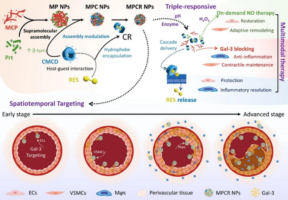
The TMU team developed “triple-responsive” nanoparticles (MPCR NPs) that act as a precision biological shield. Rather than circulating broadly like traditional systemic drugs, these nanoparticles target Galectin-3 (Gal-3)—a protein that serves as a persistent “homing beacon” for inflammation and structural weakening.
Key features of this Biological Structural Intervention include:
Precision Targeting: The nanoparticles achieve a selective accumulation in diseased aortic tissue, ensuring therapeutic action is concentrated exactly where the wall is failing.
Triple-Responsive Activation: The therapy remains dormant until it senses the specific acidic pH, enzymatic activity, and oxidative stress found at the site of aortic damage.
Multimodal Repair: Once activated, the system releases a combination of Nitric Oxide (NO) and Resveratrol (RES) to stabilize vascular muscle cells, restore the protective vessel lining, and block the enzymatic destruction of the aortic wall.
Transforming the Future of Cardiovascular Care
This research establishes a new paradigm: Active Prevention. By reinforcing the aorta’s structural integrity biologically, this technology bridges the dangerous clinical gap between daily blood pressure pills and invasive emergency surgery.
“This platform demonstrates how nanomedicine can move from simply delivering drugs to actively shaping the biological environment,” explains Professor Fwu-Long Mi. “It provides a scalable strategy for the preemptive treatment of complex vascular disorders”.
The findings mark a significant step toward a future where “precision prevention” replaces “emergency reaction,” potentially saving lives by ensuring the aorta never reaches a breaking point.
Look for More Information
Original Article:





 Total Users : 496241